The Protruding Trend of Euroscepticism
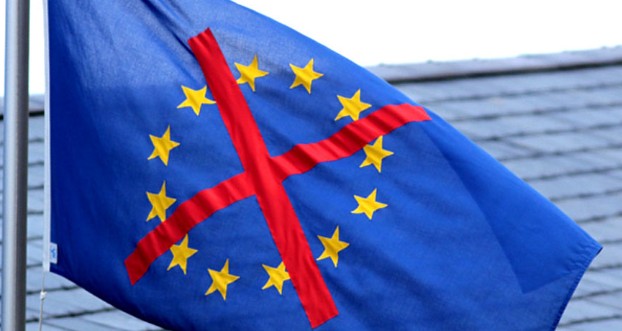
There is a protruding trend of Euroscepticism that has engulfed Europe. We saw this with Brexit, we saw his with the challenges that emerged from countries like Hungary and Poland, with respect to the Ukraine Grain Deal that was harming the sales of farmers who were actually part of the EU; but recently, we also see this with the 10 000 farmers from all around Europe, who came to Brussels to protest EU policies and leadership. Evidently, there is also a leadership crisis in Europe that occurs parallel to a new Trump administration in the US that has inspired calls for Europe to also be made great again. Caught in the cross hairs of these developments appears to be Ursula von der Leyen, the president of the European Commission herself – and we ought to address this further.
THE PROTRUDING TREND OF EUROSCEPTICISM ACROSS EUROPE
Ursula Von Der Leyen and accelerated Euroscepticism, and we ought to begin with contextualising the protruding trend of Euroscepticism. So, Euroscepticism is a term used to describe the opposition and criticism of the European Union (also known as the EU). The EU is generally an economic, political, and social union of 27 member countries that chose to collaborate towards what was supposed to be the promotion of peace, security, democracy, equality, justice, and solidarity among its members.
Now, many have attributed the recent rise of Euroscepticism to three primary factors: (1) The first is the increasing power wielded by the European Union in relation to national governments — This particular factor has led many citizens to feel that their national government is no longer in control of major policy decisions and that power has shifted largely to the EU. (2) The second factor relates to economic concerns related to various austerity measures — The factor has caused citizens to be concerned that future and current austerity measures adopted by the EU will cause extreme economic hardship resulting in potential job losses, service cuts, and shrinking economies. (3) Then the third factor is a rapid increase in immigration into EU countries — This third factor has sparked debate among Eurosceptic groups who believe that immigration leads to a dilution of national identity and a threat to their culture (this is also largely tied to the genuine concerns that are expressed through those who criticise the great replacement agenda). Furthermore, some eurosceptics are also concerned that high levels of immigration will lead to an influx of foreign workers competing for limited local jobs (which is a claim that is also echoed in many immigration discussions, including in places such as the US, and South Africa and more). Ultimately, Euroscepticism has long been on the rise.
EUROSCEPTICISM IS BEING COMPOUNDED BY THE LEADERSHIP CRISIS IN EUROPE
So, having this understanding of Euroscepticism, it is critical to further note that in the contemporary landscape of the European Union, Euroscepticism has intensified dramatically, exacerbated by a profound leadership crisis at the heart of the bloc’s institutions. This crisis is not merely a fleeting political hiccup but a structural malaise embedded in the status quo, where unelected bureaucrats wield disproportionate power over the lives of millions. And perhaps nowhere is this more starkly illustrated than in the leadership of the European Commission, which is the EU’s primary executive arm. As you’d be aware, the Commission serves as the guardian of the EU’s foundational treaties, proposing new legislation, enforcing compliance among member states, and overseeing the implementation of policies that span everything from trade to environmental standards.
Additionally, the Commission manages the vast EU budget, allocates funds for regional development and crises, and represents the bloc in international negotiations, from trade deals to diplomatic accords. [PAUSE] Now, at its helm stands Ursula von der Leyen, whose tenure has become a lightning rod for discontent, symbolizing the disconnect between Brussels’ so-called elite and the everyday citizens they purport to serve. Now quite notable is that public sentiment across Europe has coalesced into a damning verdict: which states that Ursula von der Leyen is systematically undermining the continent’s foundations. This verdict is rooted in a series of policy decisions that many view as detrimental to Europe’s cultural, economic, and social fabric. Chief among these is Ursula VDL’s alleged complicity in the “great replacement” agenda, facilitated through unchecked mass migration. Under von der Leyen’s watch, the EU has pursued policies that prioritize open borders and asylum frameworks, often at the expense of national sovereignty and security.
For instance, the New Pact on Migration and Asylum, championed by the Commission, has been accused of redistributing migrants across member states without adequate consultation or border controls, which has led to overwhelmed social services in countries like Germany, France, and Italy.
Then, compounding this is the economic fallout attributed to von der Leyen’s aggressive climate agenda. The European Green Deal, which is her flagship initiative, aims for carbon neutrality by 2050 through stringent regulations on emissions, energy transitions, and industrial practices. Well, what has been notable about this is its resultant economic ruin. Farmers across the Netherlands, Poland, and France have protested en masse against policies that impose burdensome costs on agriculture, such as nitrogen reduction mandates that threaten livelihoods.
Additionally, energy prices have skyrocketed due to the hasty phase-out of fossil fuels and reliance on intermittent renewables, leaving households vulnerable to blackouts and inflation. Germany’s Energiewende, amplified under EU directives, has seen manufacturing corporations like BASF relocate operations abroad to escape high energy costs. And the irony here is that: while von der Leyen touts sustainability, the EU’s dependence on imported gas from volatile suppliers has exposed vulnerabilities, especially amid geopolitical tensions. This green scam” is thus essentially prioritising ideological pursuits over pragmatic economic stability, thus hollowing out industries and exacerbating unemployment in already struggling regions.
But, it’s not just the economy: von der Leyen’s foreign policy expenditures have drawn ire for squandering billions in taxpayer euros on distant conflicts and regimes perceived as hostile or irrelevant to European interests. The Commission’s support for Ukraine in the war with Russia, including massive aid packages exceeding €100 billion in military, financial, and humanitarian assistance, is a prime example. While framed as a defense of European values, many citizens question why their hard-earned money funds endless proxy wars rather than domestic priorities like healthcare or infrastructure.
And so, ultimately, at the core of this leadership crisis in the EU lies a fundamental democratic deficit: European citizens never directly elected von der Leyen, rendering her unaccountable to the very people her decisions affect. Appointed through an opaque process involving backroom deals among EU leaders and the European Parliament, she embodies the elitist nature of Brussels’ governance. Unlike national leaders who face electoral reckoning, von der Leyen cannot be ousted by popular vote, even as polls show plummeting approval ratings—dipping below 40% in several member states. This weird protection from democratic oversight is what is fueling Eurosceptic parties like France’s National Rally or Germany’s AfD, which challenge the remote, unrepresentative bureaucracy of the European Commission.
URSULA VON DER LEYEN IS CENTRAL TO THE EUROPEAN LEADERSHIP CRISIS
As alluded to in the excerpt we just saw, Von der Leyen is embroiled in a number of scandals concerning corruption and diabolical policy consideration – and this has fueled the leadership crisis that has been central to the growth in Euroscepticism. First, after she was appointed president of the European Commission, VDL again became embroiled in controversy, this time involving the procurement of the Covid-19 vaccine from Pfizer. The scandal, which the media dubbed Pfizergate, related to the purchase of 1.8 billion doses of the Pfizer vaccine for use across the EU. It transpired that: a) the number of doses was far greater than was required, resulting in a significant number having to be either destroyed or donated; b) the excess doses cost the EU €4 billion; c) the total value of the contract, which was reported as being approximately €20 billion, was inflated; and d) the most damaging charge, the contract for the vaccines was negotiated directly between VDL and Albert Bourla, the CEO of Pfizer. The negotiations were conducted using sms messages, which VDL later claimed to have deleted.
The New York Times, which initially carried out the investigation into Pfizergate, brought a lawsuit against the European Commission for failing to provide access to the sms conversations between VDL and Bourla. In Belgium, a lobbyist, Frederic Baldan, filed a criminal complaint citing corruption and the destruction of documents. The Belgian lawsuit was eventually taken over by the European Public Prosecutor’s Office, which opened a criminal investigation. The outcome of these legal proceedings/investigations is still pending! Kindly have a listen as German MEP Christine Anderson had her microphone cut off in the EU Parliament for calling out the corruption surrounding Ursula von der Leyen’s multi billion euro Pfizer vaccine contract.
But ultimately, the apparent impunity surrounding Ursula von der Leyen in the “Pfizergate” scandal raises profound questions not only about her personal conduct but also about systemic issues within the European Commission itself. Even opposition MEPs from both the left and right, argue this reflects deeper institutional flaws: including a culture of opacity, limited judicial accountability for top officials, and weak enforcement of ethics rules that allow high-level decisions to evade scrutiny. And as such, it is this double standard—where the EU lectures member states on rule of law while its own leadership appears shielded—that further erodes public trust in Brussels – thus further pushing EU citizens towards Euroscepticism.
And such institutional distrust has even contributed to voter disillusionment across Europe, manifesting in the sustained rise of right-wing parties. In recent years, the right or conservatives have gained ground in countries like France, Italy, Austria, Germany, and the Netherlands, often campaigning on anti-EU policies, such as strict immigration, and the need to address economic grievances. And evidently (seeing as right wing parties are on the rise) the narrative of a corrupt Brussels – exemplified by scandals like Pfizergate and Qatargate – provides potent ammunition for these parties, as they expose the Commission for the out-of-touch and unaccountable establishment that it is.
What is also notable is that Ursula VDL is trying to export these detrimental green ideas, and doing so at a cost to Europeans. For instance, at the concluded 8th South Africa-EU Summit, in Cape Town on the 13th of March, Ursula von der Leyen announced a £4.7 billion pounds investment package, allegedly aiming to deepen trade ties.
Let’s directly respond to this. First, the reason many European companies are interested in South Africa and many African countries is because Europe is spent, they do not have many natural resources to offer – that is why colonisation was a big financial strategy for most European countries to begin with. Secondly, the so-called green policies are not about providing incentives for European companies (those companies already use foreign direct investment as a tool for eroding the sovereign policies of nations and disenfranchising their citizens). Rather, these so-called green policies are a neo-colonial tactic that coddles a dependent relationship – they are literally an extension of the problems with foreign direct investment. And the South African government needs to cease from prioritising such relations with all nations, because it hinges the development of the nation on the dictates of other nations and their multinational corporations.
Thirdly, this is further exemplified by the cooperation that Ursula VDL refers to, with respect to science and research, and the work opportunities that come with this. A significant benefit she highlights is that over 1000 South Africans study and teach in European universities. [PAUSE] Now, while I will not discourage people from making choices to work in Europe; I think it is telling that what South Africa offers Europe is the primary benefit that was highlighted. And of course, this is intrinsic to all investors, but, the cost that comes with such a relationship with Europe is among the incommensurably great ones. The importation of the green agenda is neither a commensurate cost for economic ties with Europe, nor is it a significant benefit or gain. The same can be said with the loss of more South African labour to European economies. And so, there is a categorical imperative to pray against foolish and detrimental global associations and alliances, especially with respect to the G20 and the leaders’ summit in November.
IS EUROSCEPTICISM A THREAT TO THE EUROPEAN UNION?
Now, that was a minor (and I hope necessary) digression, although tied to the discussion on euroscepticism, as we just highlighted that VDL is certainly trying to export the same policies that have been detrimental to Europe.
Well, let’s then proceed to address whether Euroscepticism is a threat to the EU, and whether that is a bad thing. The straightforward answer is yes, Euroscepticism poses a genuine threat to the EU’s current structure and integration ambitions, but no, this is not inherently a bad development. In fact, Euroscepticism has emerged as one of the primary mechanisms through which European citizens can hold the EU accountable, particularly given the Union’s persistent democratic deficit. As you’d recall, citizens do not directly elect the President of the European Commission; instead, the European Council proposes a candidate, and the European Parliament approves them, often in a process influenced by backroom deals among national leaders rather than a clear public mandate.
Well, this indirect system limits direct voter influence over the EU’s executive branch, making Eurosceptic movements and parties vital channels for expressing dissatisfaction.I would even argue that events like Brexit exemplify this dynamic. The 2016 referendum, driven by widespread frustration with EU policies on immigration, sovereignty, and economic regulation, represented a rare instance where citizens could directly challenge Brussels’ direction. Such actions force the EU to confront public discontent that might otherwise fester unaddressed. Therefore, euroscepticism compels EU institutions to justify their decisions, adapt policies, or risk further fragmentation – which is what is happening now.
Additionally, this accountability function is vividly illustrated in Germany by the surge in support for the Alternative for Germany (or AfD). As of late 2025, following the February snap federal election where the AfD secured a record 20.8% of the vote and finished second nationally, the party has maintained strong polling momentum. Recent surveys have shown the AfD leading or tying with Chancellor Friedrich Merz’s CDU/CSU bloc, with figures reaching 25-27% in some polls, making it the most popular party in several instances. Particularly dominant in eastern states, the AfD’s Eurosceptic platform—criticizing EU migration policies, fiscal transfers, and perceived overreach—resonates with a significant portion of Germans who feel the Union no longer prioritizes their national interests. The AfD’s views thus reflect a broader consensus among many voters that Germany’s deep integration into the EU has come at a cost, whether through economic burdens like contributions to EU budgets and bailouts, or cultural shifts tied to free movement and asylum rules.
As such, while mainstream parties or mainstream media often dismiss the AfD as extremist, its electoral success underscores legitimate grievances: which primarily touch on stagnation in parts of the economy, concerns over energy policy influenced by EU green deals, and frustration with Brussels’ handling of crises like Ukraine aid. By channeling these sentiments, the AfD and similar parties across Europe provide a corrective force, pushing for reforms such as re-negotiating treaties, repatriating powers, or even contemplating exit from the EU in extreme cases. But, ultimately, euroscepticism is an essential tool of enforcing checks and balances on the EU. It places before the EU the option of taking heed to the demands of the people, or risk fragmentation and eventual collapse – which I believe are pretty fair options.
Secondly, as far as the substantive reasons for euroscepticism in Germany or from the AfD is concerned, the obligation of a government is to its people first, or – in this case – the obligation of a multi-state entity should be to its member states first. However, the EU has a constant challenge where it undermines unilateral government decisions and preferences because of its modus operandi of blanket policies. Again you would recall that among the arguments from the ‘leave’ campaign in the Brexit debate was that EU immigration laws undermined Britain’s sovereignty to regulate immigration to an intolerable extent, and the EU refused to budge on issues such as immigration, citing its commitment to freedom of movement. Therefore, the EU is the reason for euroscepticism, and entities like the AfD party are merely bodies that echo remarks that already exist, and have existed for a long time.
In fact, in addition to Britain and Germany, we also saw this recently because on December 18th, Brussels became the epicenter of European agricultural discontent as an estimated 10,000 farmers from all 27 EU member states descended on the city in one of the largest protests the capital has seen this century. Organised by the pan-European farm lobby Copa-Cogeca, the demonstration coincided with a high-stakes EU leaders’ summit. Hundreds of tractors—reports vary from 150 to over 1,000—clogged the streets of the European Quarter. Farmers waved flags from their nations, chanted slogans, and displayed banners decrying “unfair competition” and “smoke and mirrors” policies from Brussels.
Now, the primary target was the proposed EU-Mercosur free-trade agreement with South American nations (namely, Brazil, Argentina, Paraguay, Bolivia, and Uruguay). Farmers argue that the deal, negotiated for over 25 years, would flood the European market with cheaper beef, poultry, sugar, and other products produced under lower environmental and labor standards, devastating local livelihoods.
Additional grievances included proposed reforms to the Common Agricultural Policy (CAP) post-2027, which farmers fear will slash subsidies by over 20%, excessive bureaucracy, rising costs for fertilizers and energy, and stringent green regulations amid climate pressures. Not to mention, the timing amplified the pressure: EU Commission President Ursula von der Leyen had planned to sign the Mercosur deal soon, but opposition from France, Italy, and others forced a postponement to January 2026. Von der Leyen met a farmer delegation, pledging support, but protesters dismissed it as insufficient. But, ultimately, this mobilization underscored a united front across Europe’s diverse farming communities—from Irish beef producers to Lithuanian unions—demanding fair trade, sustained funding, and recognition of agriculture’s strategic role.
Furthermore, we also witnessed the same in 2023, in how the Black Sea Grain Deal was causing growing Euroscepticism. The concern, especially from European farmers, was that grain coming from Ukraine was being sold below market price. This was a result of tariffs being removed on all Ukraine grain across Europe. And this was a valid concern because these conditions gave Ukraine grain a significant decrease in price that makes it comparatively preferable to locally grown grain for consumers.
Written By Lindokuhle Mabaso