The EU’s War on X; and the State of Journalism
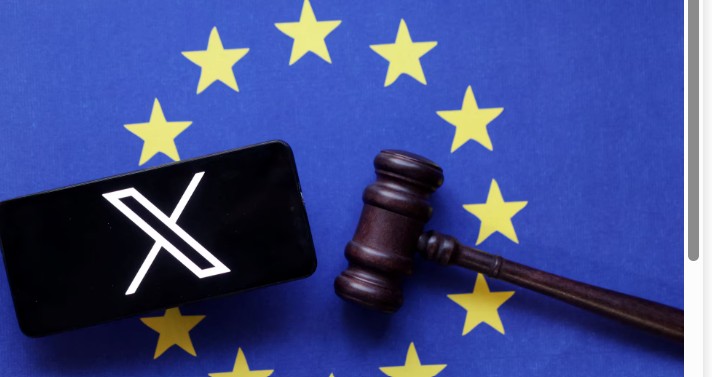
It’s no secret that free speech is under attack across Europe. Under the guise of preserving order and protecting the public from ill-defined harms, authorities across the continent have embarked on a program of censoring wrongthink and jailing violators. But, still, even as we were aware of the war on free speech in Europe, it was NOT obvious that European authorities ALSO intended to make money by suppressing speech. Well, that was until, the European Union fined X 120 million euros (which is about $140 million) for a series of alleged violations of the Digital Services Act, making X the first company to face a fine under the 2022 law.
WHY DID THE EUROPEAN COMMISSION FINE X 120 MILLION EUROS?
And now onto our main discussion, in which we will start by addressing the EU’s War on X. Now, you’d be aware that the European Commission, which is the executive arm of the European Union, has imposed a fine of €120 million on Elon Musk’s social media platform X. This penalty, announced in early December this year, stems from allegations that X violated key transparency provisions under the Digital Services Act (or the DSA), which is an EU regulation designed to govern online platforms and allegedly ensure accountability in the digital space.
Well, to begin with, we have to zoom in on the “why” factor; addressing the reasons presented by the commission. And in essence, the Commission cited three specific infractions: first is X’s decision to make blue checkmarks available to any paying user, second is a lack of transparency in X’s advertising repository, and third is the failure to provide vetted researchers with adequate access to public data. A spokesperson for the Commission even went on to state that the decision (quote): “…has nothing to do with content moderation…” all in an attempt to frame the action as a straightforward enforcement of transparency rules rather than an actual attempted intrusion into how content is managed or suppressed – which is exactly what the European Commission’s fine is.
Now, to some, these charges from the EUropean Commission appear technical and bureaucratic, and simply aimed at fostering a more open and verifiable online ecosystem. Additionally the DSA, which came into full effect in 2024, mandates that very large online platforms like X, which have a massive user base exceeding 45 million in the EU, adhere to stringent requirements to combat disinformation, protect users, and promote fair practices. But, this perception actually misses crucial nuances, and so we ought to directly respond to the 3 infractions cited by the EU Commission to highlight this even further.
First, as we noted earlier, the European Commission problematised X’s decision to make blue checkmarks available to any paying user. This blue checkmark issue revolves around X’s post-acquisition overhaul under Elon Musk. Previously, these verification badges were reserved for notable figures, organizations, and journalists, and thus served as a sort of marker of authenticity. However, since Musk’s takeover in late 2022, X introduced a subscription model where anyone could purchase a blue check for a monthly fee, effectively democratizing verification but, according to the EU, this misleading users about the credibility of accounts.
But, here’s the thing: when the blue checkmarks were reserved for so–called notable figures, the primary requirement was mostly a recognition of the person or organisation’s popularity. Knowing this, Elon Musk sought to end the perceived elitism of the old system, where checks were given at Twitter’s discretion, by making verification accessible to everyone who wanted to pay for that. As a person who has one, I can testify that this does not come at the expense of verifying authenticity: through the Musk model for checkmarks, specific information is required to prove you are who you claim to be, and even when you change your handle or profile picture, you go through a review period where X removes your checkmark, to access whether they can credibly allow you to proceed with the subscription. Additionally, official accounts used by public figures or journalists will include the logo of the organisation’s they work for from X, and even accounts created in someone else’s name for commentary purposes have that qualifier inputted by X, similarly, parody accounts have that description inputted as well. Not to mention, the community notes.
And yet, those within the Commission argue that this pay-to-verify system under Musk somehow dilutes trust, as it no longer signals rigorous identity checks, potentially amplifying the spread of false information from unvetted sources. Meanwhile, ALL that I just described did not exist under the pre-200 Msk purchase twitter! You literally just had to be popular, by the then-Twitter’s standards!
Then, the second violation concerns X’s advertising repository, which speaks to a required database under the DSA where platforms MUST publicly disclose details about ads, including targeting criteria, sponsors, and reach metrics. The Commission found X’s repository to be inadequately searchable and incomplete, and thus allegedly hindering users and regulators from scrutinising how advertisements are disseminated. This opacity, they claim, undermines efforts to hold advertisers accountable and prevents the detection of manipulative campaigns, such as those involving political propaganda or deceptive marketing.
Finally, the data access complaint highlights X’s reluctance to grant “vetted researchers” special privileges to analyze public posts and trends. The DSA stipulates that very large online platforms must facilitate such access to enable independent studies on societal risks like hate speech, election interference, or algorithmic biases, without compromising user privacy.
Here’s the response: While the Commission portrays these measures as neutral safeguards for the digital space, a deeper examination actually reveals a more insidious undercurrent: which is that this fine (and, in particular its stated reasons) is inextricably linked to content moderation, which (frankly) is a euphemism for censorship. Despite the official denial from the Commission itself, their enforcement actions align with a broader agenda to exert control over online discourse. For instance, by demanding that X hand over data to government-approved researchers (who, by the way, are often affiliated with EU-funded institutions or NGOs), the Commission is effectively outsourcing surveillance and flagging mechanisms. These researchers could then identify so-called “problematic” content, such as posts deemed to spread misinformation or incite division, thus paving the way for platforms to be pressured into removals or demotions.
And to be clear: this is NOT mere speculation; it is quite literally a pattern observed in regulatory frameworks worldwide, where transparency tools serve as gateways to influence content decisions. For instance, consider the concept of “censorship-by-proxy,” which is a strategy where governments avoid direct mandates by leveraging intermediaries. In the United States, from the year 2020 to 2022, the Department of Homeland Security (DHS) collaborated with federally funded NGOs and academic entities to monitor social media for so-called “disinformation.” These groups would compile reports on offending content and lobby platforms like Twitter (before it was bought by Musk and became X) to censor it, all under the guise of national security or public health during the COVID-19 plandemic and the 2020 elections.
You’d even recall that revelations from the Twitter Files, released by Musk in 2022, exposed how the DHS-backed initiatives, such as the Election Integrity Partnership, flagged millions of posts for moderation, often targeting conservative viewpoints or skepticism toward official narratives. This indirect approach allowed authorities to sidestep First Amendment constraints while achieving de facto censorship.
THE REAL REASON BEHIND THE EUROPEAN COMMISSION’S X FINE
But, let’s also address the real reason. Now, last year, 2024, Elon Musk tweeted that the European Commission had offered his online platform X “an illegal secret deal.” What it entailed is that if he agreed to censor content, then the Commission would not fine his platform. He said that X had rejected the offer, while other platforms had accepted it.
But it remains notable that the Commission essentially asked Elon Musk to implement the Digital Services Act’s concerning provisions on his platform – which is, in other words, censorship by proxy. Now, this development exposes the hypocrisy in the Commission’s stance. By insisting the fine is unrelated to content moderation, the EU is engaging in its own form of disinformation. Transparency, in their lexicon, is really a Trojan horse for control. The blue checkmark policy, for instance, democratizes visibility, allowing ordinary users to gain prominence without elite gatekeeping—whichis a move that disrupts traditional power structures in media. Similarly, restricting ad transparency might protect trade secrets, but mandating it enables regulators to police commercial speech. And data access is simply a direct pipeline for state-influenced oversight of public discourse.
In fact, the requirement for data access is NOT just about academic curiosity; more than anything, it is a tool for building dossiers on user behavior and content trends that can inform censorship demands. EU officials have openly tied these obligations to combating “systemic risks,” including the amplification of illegal hate speech or foreign interference. YET, the selection of “vetted” researchers also raises alarms because it is never clear who vets the vetters? Often, these are entities aligned with governmental priorities, potentially biased toward progressive or establishment views. For example, NGOs like the Global Disinformation Index or EU-supported think tanks have been accused of disproportionately targeting right-leaning media outlets, labeling them as unreliable to starve them of advertisement revenue.
Additionally, by framing censorship as “transparency,” the EU is actually trying to normalise government overreach, thus eroding the internet’s foundational principles of open expression. And so, the fine against X isn’t just about rules; it’s a battle for the protection of free speech in the digital age, where proxies and pretexts mask the true intent: to curate narratives under the banner of protection.In conclusion, while the European Commission cloaks its actions in the language of accountability, the reality is a sophisticated push toward censorship-by-proxy. By fining X for these transparency lapses, the EU is not safeguarding users but empowering itself to influence what billions see and say online. This strategy, mirrored in past US efforts, relies on disinformation about its motives to evade scrutiny.
Nevertheless, what remains is that free speech is an inalienable freedom, that is not in the purview of any official or unelected autocrat in the European Commission to limit or conditionalise. It is a God-given right.
DEBATES ON THE STATE OF JOURNALISM TODAY
Let’s then proceed to the second part of our discussion, in which we address the state of journalism – particularly debates around the state of journalism in the world. So, part of what prompted this part of our discussion is that in the same period that X was fined the New York Times held a roundtable with a number of journalists and podcasters (from diverse backgrounds), where they essentially tried to assess the state of the media’s credibility and journalism.
There are two notable things to note. First, is the jarring denial of the presence of liberal views in the mainstream media.
When I saw this, my immediate thought was something pointed out by an X user, which is that (and I’m paraphrasing)… is that the frustration with trying to have discussions with those on the left is that they often pretend not to be aware of the issue which then makes having a discussion with them impossible. ANd I get where this sentiment comes from because Stephanie Ruhle, surely must ne aware that MSNBC (where she works) has very few good things to say about Trump while paying compliments to those on the left.
And so, in a dazzling display of irony, by pretending not to be aware of the issues that viewers clearly know, Stephanie Rihle inadvertently makes the case for why viewers should not trust the mainstream media. And this is one of the most crucial points to note in light of the state of the media and the state of trust towards the media today.
Then secondly, and speaking of president Trump and the media, the question came up on whether he has contributed to a disruption or destruction of journalism. Interestingly, including those who hold conservative views, there appears to be an issue with president Trump suing media or news corporations; and so, once again we ought to address this.
TRUMP’S CASES AGAINST THE DECEPTIVE MEDIA COVERAGE ARE A TRIUMPH FOR FREE SPEECH
Let’s address this once again, I believe that president Trump suing the BBC and even his successful lawsuit against CBS are a triumph for free speech, and not a danger to the media or journalism. For some context: You’d recall that president Trump announced a lawsuit against CBS, ’60 Minutes’, and Paramount, alleging election fraud through manipulation of interview content involving Kamala Harris. And we ought to begin with why Trump is right about this accusation; looking at some context.
In essence, for a long time in the campaign period before the November election, Kamala Harris did not give time to sit-down interviews with the media – in fact, she was notorious for this fact. Instead, she had prioritised rallies, under the pretentious justification that her campaign began late, and so she had to cover much ground. Obviously, this was a bogus justification because she had every opportunity to do both campaign rallies and sit-down media interviews (like most presidential candidates do). But, eventually, this aversion to sit down interviews began to work against Harris because she had no dominant policy narrative associated with her, and was avoiding sit-down interviews – which were supposed to be an opportunity for her to communicate her policy direction. And so, her poll numbers were tanking, and then eventually Kamala Harris was then desperate enough to consider mainstream media interviews.
But, even the focus on mainstream media interviews was a soft entry for Kamala Harris into the world of sit-down discussions on policy, because the mainstream media has a very obvious liberal bias, meaning that it was far from being the bedrock of adequate election coverage. But still, the mainstream media, during elections, generally is supposed to focus explicitly on administrative and policy issues. This is why, despite bias and misinformation from the likes of CNN, CBS, and MSNBC, JD Vance appeared steadily on those platforms and discussed policy and critical issues of governance.
Which then brings us to the CBS 60 Minutes interview that became central to the lawsuit. The issue with this interview was that CBS News literally manipulated the final product they showed to viewers of that particular interview. In fact, CBS was even formally issued with an FCC complaint charging “significant and intentional news distortion” regarding its surreptitious editing of Kamala Harris’ 60 Minutes interview.
In essence, CBS KNEW that Harris was notorious from incoherent and verbose responses, and how that made her less appealing and trustworthy to voters. The edited interview was thus a deliberate effort to clean up her image as a presidential candidate in this respect! In fact, we can note this intention to clean up Kamala Harris’ image at the time when we contrast the ‘60 Minutes’ interview with others that Kamala Harris did. For instance, in her desperation as her numbers were tanking, Harris also appeared on Fox News for an interview with Bret Baier. The consensus with Bret Baier is that he has the most diverse viewers, inclusive of conservatives, liberals and centrists – which means this was a decent opportunity for Harris to endeavour to speak sensibly. Well, she was asked critical and very expected questions, but the quality of her responses continued to show that she has been pampered by a media that is biassed towards her, and that when she is pressed in the slightest, she crumbles.
All of this is to say that the lawsuit from Trump is valid because CBS did edit or “doctor” the contents of the 60 Minutes interview in order to try to remedy Kamala Harris’ image as a political candidate in a manner that amounted to a manipulation of voters, because the 60 Minutes interview was not an accurate display of Kamala Harris.
Furthermore, I should also state in light of this discussion that the election manipulation aspect does not stem from the fact that CBS brought in Kamala Harris on their 60 Minutes programme, or even the fact that CBS has a liberal bias – all media companies have an agenda, and this is how CBS has inclined itself. RATHER, the election manipulation aspect is primarily found in the fact that CBS was intentionally trying to make Kamala Harris appear in a manner far different to how she actually is – they used editing capacities to make her a presentable candidate, thus robbing voters and viewers of the opportunity to adjudicate her on the basis of an objective and unedited depiction of herself. This is where the election manipulation issue is.
Now, here is a really important question pertaining to all of this: Is president Trump’s lawsuit against CBS, 60 Minutes and Paramount then equivalent to a war on media freedom? And I will state now that the answer is categorically no. In fact, this is precisely what a world where free speech has absolute protections ought to look like.
Let me explain. CBS, 60 Minutes and Paramount are free to produce content that they wish to broadcast. In fact, as far as I am concerned, this lawsuit is neither trying to police the content that these companies and programmes produce, nor is it trying to stop them from producing content altogether. Instead, what this lawsuit is about is holding these entities accountable for misleading content that they were free to produce and broadcast. This is to say that this lawsuit is addressing abuses of media freedom, as a result of manipulated programming.
And in this case, the manipulated programming is because the entities whom the lawsuit is directed towards intentionally doctored an interview in order to make a contender in a presidential election look far more appealing than she actually was. When you look at the contrast between the actual answer that Kamala Harris gave and the doctored version from CBS, you can clearly see that they were trying to cover her propensity to be incoherent in her responses – which, at that time, was a big critique against her. Therefore, this lawsuit is about accountability for ill conduct from media entities.
I should also highlight that in a world where free speech is regarded as an absolutely protected inalienable freedom, no one (including media corporations) should have ANY limits placed on their freedom to speak or produce content and information – no matter how hateful, and misinforming. HOWEVER, where the content is, in fact, riddled with issues such as inciting violence against others or misinformation, there should be a fair and objective legal process that allows litigation. This is what an absolute value of free speech looks like; as opposed to censorship laws that try to police and speech – like we see in Europe, something that JD Vance warned Europe against during the Munich Security Conference.
That, in essence, is what the CBS lawsuit reflected. It was not a legal measure aimed at taking away press and media freedom, it is one that holds the media accountable within the ambit of absolute protection of free speech. And so, it is a triumph for free speech because it demonstrates a constructive way to deal with a deceptive media, WITHOUT censorship. EVEN for the BBC lawsuit: Trump has given them time to retract the documentary AND apologise, before he doubles down on the lawsuit. This is what an intersection between absolute protections for free speech and accountability look like! And this is something that was long emphasised by the President of Loveworld Incorporated.
Written by Lindokuhle Mabaso

[1751]jk4casino Official Link: Login, Register & App Download for the Best Slots in the Philippines Experience premium gaming at jk4casino! Use the jk4casino official link for a fast jk4casino login and register today. Get the jk4casino app download to play the best jk4casino slots in the Philippines. Join the top-rated platform for secure betting, exciting bonuses, and massive rewards. visit: jk4casino
[1839]Fundalor Casino México | Registro, Login y Descargar APK Únete a Fundalor Casino México, la plataforma líder en apuestas. Realiza tu registro, accede al login y descarga la APK oficial para jugar y ganar desde tu celular. visit: fundalor
Хорошие результаты дает продвижение ютуб канала с помощью хрумера https://www.olx.ua/d/uk/obyavlenie/progon-hrumerom-dr-50-po-ahrefs-uvelichu-reyting-domena-IDXnHrG.html, если использовать правильные стратегии.