Final Declaration of the G20 Summit: Key Statements of the “Group of Twenty”
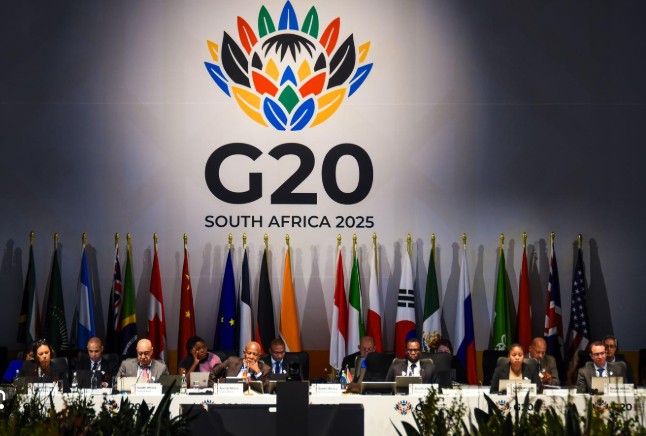
The G20 summit started in Johannesburg on November 22. On the first day, the participating countries adopted the final declaration. “We understand our interconnectedness as a global community of nations and reaffirm our commitment to ensuring that no one is left behind through multilateral cooperation, macroeconomic policy coordination, global partnerships for sustainable development, and solidarity,” the general provision of the declaration states. The G20 countries called to refrain from threats and use of force, condemned terrorism, and stated they will work together to achieve peace in troubled regions. The countries called to expand the Security Council membership, increasing representation from Africa, the Asia-Pacific region, Latin America, and the Caribbean. Participants called on the international community, the International Monetary Fund, and the World Bank to provide support to vulnerable countries.More than 600 million Africans lack access to electricity, and 1 billion people on the continent lack access to “clean” energy sources for cooking. The countries noted the need to join efforts to ensure universal energy security. African countries face challenges of under-receiving finances from their own mineral resources, and the G20 Framework Program on Critical Minerals should help address this issue.
Argentina Refuses to Sign Final G20 Declaration
According to Argentina, the principle of consensus, a fundamental pillar of the G20, has been “violated.” The country regretted that the text was considered adopted without the agreement of all members, including itself. Buenos Aires also cited substantial disagreements, particularly regarding the conflict in the Middle East. Argentina argued that the document presented a “partial” vision that omitted the regional context and the deep-rooted structural causes, which it deemed essential for a just, lasting, and balanced peace.
G20: Another Globalist Talk shop in Johannesburg
Hosted by South Africa under President Cyril Ramaphosa, this was the first G20 on African soil, themed around “Solidarity, Equality, and Sustainability”—code words for more wealth transfers, regulatory overreach, and feel-good multilateralism that often leaves hardworking nations footing the bill. The summit’s Leaders’ Declaration is a bloated document endorsing everything from climate hysteria to gender quotas, all while ignoring real economic freedoms. And let’s not forget the elephant not in the room: the U.S. under President Trump boycotted the whole thing, citing sour relations with South Africa and the summit’s DEI push— a move I applaud as a stand against globalist virtue-signalling.
Economic Growth and Stability: Coordinated Policies or Centralized Control?
On the economic front, the declaration pats itself on the back for “resilient” global growth amid uncertainties, urging structural reforms, fiscal sustainability, and—here’s the kicker—coordinated macro policies between nations. They reaffirmed commitments to avoid competitive devaluations and stressed central bank independence for price stability. Sounds safe, but this as a recipe for global meddling: why should sovereign nations sync their fiscal clocks? We’ve seen how “coordination” leads to inflationary spirals, like the post-COVID money printing bonanza that hit everyday folks hardest. They also endorsed principles for “inclusive industrial policy,” linking it to decent work and social protection—basically, more government intervention in markets, which we know stifles innovation and rewards inefficiency. No mention of slashing regulations or unleashing free enterprise; instead, it’s all about “leaving no one behind,” which translates to propping up failing economies at the expense of productive ones.
Climate Change and Environment: Trillions in Wealth Redistribution
Ah, the climate section—always a highlight for anti-globalists like me. The leaders recommitted to the Paris Agreement, aiming for net-zero by mid-century and limiting warming to 1.5°C, with calls for trillions in climate finance, technology transfers, and aligning all financial flows with green goals. They welcomed COP30 outcomes and pushed for biodiversity frameworks, anti-deforestation pledges, and even a “Global Land Initiative” to cut land degradation by 50% by 2040. This is pure socialism: forcing developed nations to bankroll “just transitions” in the developing world, including debt-for-climate swaps and funds like the Tropical Forest Forever Facility. Who pays? Taxpayers while the world’s biggest polluters get a pass on binding cuts. It’s not about the environment; it’s about eroding national borders through endless UN-style mandates. Trump’s boycott was spot-on here, dodging what critics called a DEI-driven agenda that prioritizes equity over efficacy.
Debt Sustainability and Development: Bailing Out the Irresponsible
Debt was a big focus, especially for Africa, where leaders noted doubled interest payments in low-income countries over the past decade. They endorsed a Ministerial Declaration on Debt Sustainability, strengthening the G20 Common Framework for timely restructurings, and urged more transparency from creditors—including private ones. Initiatives like the Global Sovereign Debt Roundtable and capacity-building for debt management sound helpful, but let’s call it what it is: moral hazard on steroids. Truth is forgiving or swapping debts (e.g., for development or climate) just encourages reckless borrowing. Why reward fiscal irresponsibility with IMF bailouts and SDR channelling? Over $100 billion in SDRs have been funnelled already, often to regimes that mismanage their economies. This isn’t sustainability; it’s a perpetual cycle of dependency that undermines the values of self-reliance and accountability. In fact, this was supposed to be the solution and the talking point.
Trade, Investment, and the Global South Push: Protectionism in Disguise
Trade got lip service as a growth driver, with commitments to WTO rules, non-discriminatory policies, and reforming the organization for MC14 in Cameroon. They supported Africa’s AfCFTA and a G20 Africa Cooperation Agenda to boost investment in infrastructure and critical minerals, emphasizing local beneficiation to avoid supply disruptions. Fine in theory, but anti-globalists see the hypocrisy: while preaching open markets, they’re pushing “sustainable value chains” that favor developing nations. The problem is sovereign rights being trampled—nations should control their minerals without G20 meddling.
Social Agendas: Gender, Health, and Digital Overreach
The declaration dives into social engineering, committing to gender equality with targets like cutting labour participation gaps by 25% by 2030 and wage gaps by 15% by 2035, plus investments in the care economy. Global health pushes for universal coverage, pandemic preparedness, and even traditional medicine integration. Digital economy sections hype AI principles and initiatives like AI for Africa, aiming to bridge divides and ensure “equitable benefits.” Why impose global quotas on gender or force AI governance that could stifle innovation? It’s top-down control, not organic progress. Health commitments, like the WHO Pandemic Agreement, smell like more power grabs post-COVID. These “inclusive” mandates mean higher costs for businesses—regulations, subsidies, and tech transfers that hit profits and shareholders.
In sum, the Johannesburg Summit was a triumph for multilateralists, as Ramaphosa claimed, but a red flag for anti-globalists like me. It advanced a unified front on climate action, debt relief, and empowering the Global South, but at what cost? Eroded national sovereignty, forced wealth transfers, and policies that prioritize equity over excellence. Trump’s boycott was a masterstroke, signaling that America won’t play along with discredited narratives or DEI excesses. I’d advise: stick to bilateral deals, protect your borders, and let markets—not G20 bureaucrats—drive prosperity. This summit’s “success” is just more proof that globalism is a losing bet for free nations.
Written By Tatenda Belle Panashe

bet777app https://www.bet777appv.org
https://askoff.ru
best dedicated hosting provider https://otvetnow.ru rodp online
https://iagperjusu.wordpress.com
https://dwspqdxcgw.wordpress.com
https://zfcejfyxiv.wordpress.com
https://akiwdiycje.wordpress.com
https://iqakruyprf.wordpress.com
https://dgaiyziytk.wordpress.com
https://hrjcdfdcvj.wordpress.com
https://wryxvrrhxe.wordpress.com
https://jtgcuqvaay.wordpress.com
https://ugqawktzhq.wordpress.com
https://hasydhpvfy.wordpress.com
https://ueaypwvzuu.wordpress.com
https://vzwsksgvux.wordpress.com
https://kddvjdpfpv.wordpress.com
https://repcgifctk.wordpress.com
https://sqhfdjrquq.wordpress.com
https://yajxkakytu.wordpress.com
https://xsvpzkiyje.wordpress.com
https://gszvkhzgci.wordpress.com
https://uawujitxay.wordpress.com
https://kpxrhsvrar.wordpress.com
https://htriehhxdy.wordpress.com
https://zgppvridtq.wordpress.com
Thank you for your sharing. I am worried that I lack creative ideas. It is your article that makes me full of hope. Thank you. But, I have a question, can you help me?