Culture Wars: The Potential Netflix or Paramount Merger with Warner Bros
If you asked a person what is the greatest export from the US: they would probably think of mineral fuels, or military equipment and weaponry. Perhaps certain food products. Or maybe even American political ideology – especially since America was formed on the basis of Republicanism and a desire to export that political ideology and system. Well, these answers are certainly valid, especially as far as what can be calculated on paper in balance of payments sheets. However, I suspect that the greatest export from the US has been culture. From film and television to even the political side of cultural developments – looking at identity politics issues like western feminism and critical race theory. As such, there is a notable shift in the culture and so-called entertainment industry in the US, that I think ought not to be dismissed as a mere business translation, with little trickle-down effect on the socio-political fabric of the US (and the world it exports culture to).This is about more than corporate mergers; it is about who controls the airwaves, and defines culture.
THE CONTEXTUAL BACKGROUND BEHIND THE NETFLIX + WARNER BROS MERGER CONSIDERATION
And now onto our main discussion, in which we look at the fundamentally spiritual culture war behind the potential Netflix or Paramount merger with WBD. To begin with, some contextualisation. So, for years, Netflix built its empire on a simple but ruthless formula: they license everything, produce some originals, and distribute it all through a single global streaming platform. By 2019 it had become a frontrunner in streaming, but this would soon birth competition. For instance, Disney pulled its library from Netflix to launch its own streaming platform called Disney+, NBCUniversal also reclaimed its content for its streaming platform, Peacock, WarnerMedia did the same for HBO Max (now called Max), and even Paramount and Apple entered the fray. So, suddenly the licensing pipeline that had fed Netflix’s catalog was being turned off, one studio at a time, as those studios reclaimed their library of films and television shows to create their own streaming platforms.
In light of this, Netflix’s response was predictable: they went on to spend astronomical sums of money on original movies and series to plug the gaps of content. The strategy seemed to work for subscriber growth, but it came at a brutal cost. Originals are expensive, and—crucially—it appears that most viewers found that most of the originals by Netflix were not as culturally resonant or rewatchable – which I think is a euphemistic way of the viewers saying that the Netflix originals are bad. And so, Netflix originals were not generating the viewing hours that the studio produced content was. As a result, the company seemed to need a pivot, and fast.
And, Enter Warner Bros. Discovery. By 2025, Warner Bros. Discovery itself was losing its balance. The 2022 merger of WarnerMedia and Discovery had been sold as a scale play that would allow the combined company to compete with Netflix and Disney, but the reality was much messier. The solution that emerged was to split Warner Bros. Discovery in two. One half would contain the cable networks (including TNT, Discovery Channel, CNN and others, plus the rest of the legacy linear businesses, which is now rebranded as “Global Discovery.” This entity would remain a separately traded public company focused on traditional television, sports rights, and advertising. Then, the other half, which is called Warner Bros film and television studios, and includes the DC Intellectual Property, HBO, and the Max streaming technology stack—this is what would be sold. And so, Netflix pounced.
It made an offer for $83B to WBD, and if the merger would pass, Netflix would have bought the Warner Bros film and television studios, the scripted production capabilities, which includes the DC Intellectual Property, HBO, and the Max streaming technology stack. This would mean that Netflix transforms from a distributor that happens to make some of its own (bad) shows into a fully vertically integrated major studio, that owns all of the Warner Bros film and television studios IP, and effectively has swallowed up a competitor in the streaming capacity.
WHY BOTH THE RIGHT AND THE LEFT DO NOT SUPPORT A NETFLIX + WARNER BROS MERGER
Well, part of what is quite interesting about the response to the potential Netflix and WBD merger is that both those on the right and those on the left are concerned about what it might amount to – NOT necessarily to the extent that it has unified the right and the left, but to the extent that there is significant pushback against this potential merger across the political spectrum. Now, primarily, for the left, the issue with Netflix potentially purchasing WBD is that this merger would exacerbate media concentration, while already 90% of the US’s TV viewership is controlled by six conglomerates. Netflix’s dominance in originals (which amounts to 700+ hours annually) combined with Warner Bros Discovery’’s library would create a “super-studio” of sorts, with unprecedented leverage over distribution, pricing, and content.
In more detail, post-merger, Netflix would be poised to command 30% of global streaming market share, raising FCC alarms under the 1996 Telecommunications Act’s horizontal merger guidelines. Additionally, a 2024 FTC report warned that such consolidations stifle independent filmmakers, with production budgets funneled to tentpole films or tv shows. Meanwhile, this issue is not even just about market power, it is largely about Netflix having the ability to gatekeep stories that speak to substantive issues, in pursuit of what it deems a worthwhile, often incredibly woke pursuit. In fact, in light of this, Netflix is often criticized for a “quantity over quality” approach to film and television (e.g., it prioritises churning out 500 rom-coms yearly, many formulaic), and thus (through this merger) will likely prioritise data-driven content and not meaningful story telling.
Then, for the right, the potential merger between Netflix and WBD is not just big business; it is seen by conservatives as a liberal leviathan that would amplify the cultural warfare of the Hollywood so-called elites. In light of this, conservatives argue that streaming corporations already censor via shadowbans and content warnings, where less liberal or anti-trans comedians are threatened with boycotts by Netflix viewers, who are generally entitled to demand ultra-liberal content on the Netflix streaming platform. Therefore, a merger of Netflix and WBD, which would entail Netflix controlling the WBD’s streaming platform HBO Max… well, this could weaponise algorithms against dissenting views. And this is considering that a 2024 Heritage Foundation report found 70% of top-streamed content leans left on issues like climate and gender, per sentiment analysis.
This tells us that the conservative’s concerns are therefore not conspiracy. Netflix has been operating on a code of prioritise engagement (or quantity of quality), while also burying controversy or issues of substances, unless it’s culture-war bait that makes them money. And this comes at a time where (despite its own dip into the woke pool) WBD’s DC reboot under Zaslav (were praised for “de-wokifying” the DC Aquaman character) which clashes with Netflix’s progressive movies. And so, the concern is that post-merger, WBD’s DC intellectual property like Superman, who is a character generally viewed as a symbol of American exceptionalism, would get “ruined” with DEI casting or eco-messages. Much like Disney did with the Star Wars franchise, where Kathleen Kennedy (as president of Lucasfilm, under Disney) imposed not just gay characters but satanic story adaptations) – not that Diney was lacking in that respect before she came on board, considering it tried to normalise bestiality in films like Beauty & the Beast.
Then, economically, conservatives decry taxpayer bailouts. This is considering that – even as Netflix has made an offer for the merger – WBD has debt amounting to over $40B, which stems partly from COVID relief. Now, if WBD would merge with Netflix (which is a profitable but subscriber-based platform), users could see corporate welfare plans, where Netflix increases the cost of their subscriptions to make up for that debt. And the issue with this is that since they would have already swallowed a competitor in the streaming market, being WBD’s HBO Max, well then consumers do not have another option to go to see exclusively WBD-produced or streamed content – and so concerns about the violation of antitrust laws is quite valid.
THE DANGER OF NETFLIX CONTROLLING THIS PORTION OF “ENTERTAINMENT”
This then brings us to the crux of this discussion, and to set the tone: the Man of God and President of Loveworld Incorporated, the highly esteemed Rev Dr Chris Oyakhilome DSc DSc DD, once famously stated that whoever controls the airwaves controls the people. When it comes to news or even so-called entertainment, this is a crucial and far deeper understanding to have.
And I say this because entertainment is not a harmless pastime; it is one of the most powerful delivery systems for ideas ever invented. Every film, song, television series, or viral clip that you invite into your living room, your headphones, or your child’s bedroom is a Trojan horse carrying someone else’s worldview. You think you’re “just relaxing,” but you’re actually volunteering to have your values, desires, and moral boundaries quietly reshaped. And this is because the storyteller, who owns the IP, decides who is the hero and who is the villain, what is normal and what is deviant, what deserves sympathy and what deserves scorn. And so, over time, repeated exposure doesn’t just entertain you, it colonises your views. You begin to laugh at jokes you once found offensive, nod along to politics you once rejected, and feel attraction toward lifestyles you once questioned. And all the while, the change seems organic because it arrived wrapped in pleasure, and not argument.
This is why regimes, corporations, and ideologues fight so fiercely over culture. They understand that culture does not remain stagnant, and is a very strong socialisation agent. Additionally, they know that a population that is forcibly censored is likely to fight against efforts at censorship, while (in contrast) a population that internalises messaging through so-called entertainment will likely censors itself because that population will passively internalise the messaging of those who create films and television or music, and begin to appropriate them. It is literally the same idea behind the so-called “influencers”.
Now, how does this directly apply to Netflix? The Obamas’ announced a partnership with Netflix, in 2018 through their production company called Higher Ground. This partnership was sold to the public as a straightforward content deal: Barack and Michelle Obama would produce films, series, and documentaries for Netflix. But, what received far less attention is the deeper alignment of political influence embedded in the arrangement, which includes a key figure bridging the Obama’s and Netflix’s corporate leadership – and this figure is Susan Rice.
Susan Rice served as Barack Obama’s National Security Advisor from 2013 to 2017 and later as Joe Biden’s Domestic Policy Advisor until 2023. In 2020, Netflix appointed her to its board of directors. Her official biography on the company’s site highlights her “distinguished career in foreign policy, national security, and public service,” and yet the practical effect is unmistakable: what is essentially happening is that one of the Democratic Party’s most loyal and experienced operatives now helps set strategic direction for a dominant streaming platform. This is not a conspiracy; it is literally a convergence of interests. Meanwhile, the Obama’s Higher Ground production company has delivered projects such as American Factory, Crip Camp, Becoming, and Worth, all of which consistently reflect progressive ideas on labor, identity, and post-9/11 justice. This tells us that, as far as the Obama-Netflix partnership is concerned, the Obamas select stories, Netflix finances and distributes them to 270 million households worldwide, and Susan Rice sits in the boardroom helping decide which other narratives receive similar amplification. In other words, the Obamas and Netflix are curating a cultural narrative that might potentially influence 270 million households worldwide.
And concerns about this have already been seen, especially with respect to a recent campaign (also driven by Elon Musk) to boycott Netflix. This campaign challenged the hyper sexualisation of children, and very pro-LGBT content it churned out. One of the pieces of content was even produced by the Obamas’ production company.
THE NETFLIX + WARNER BROS MERGER WOULD LOOK LIKE A NEW VERSION OF MKULTRA
And so, considering the role of entertainment as a tool of mass influence and socialisation, it would appear that the potential Netflix and WBD merger (and Hollywood in general) are a new version of MKUltra. Really, it would seem that MKUltra never died; it simply scaled. Where the CIA once strapped a single subject to a chair and pumped him full of LSD, today’s successors in the entertainment industry flood billions of minds through screens. The method is cleaner, cheaper, and deniable: consisting of repetitive narratives, engineered emotional shocks, and carefully sequenced moral framing delivered 24/7 by streaming platforms, news cycles, and algorithmic feeds.
And despite the difference in the modus operandi, the goal of the entertainment remains the same as the CIA’s with MKUltra, which is to alter perception, rewrite acceptable reality, and nudge behaviour—only now the subject never signs a consent form and never leaves the laboratory. In fact, just consider almost any prestige drama released in the last decade. The pattern is remarkably consistent. First comes the trauma trigger: e,g, a child in peril, a graphic death, a sudden act of cruelty. With this, the viewer’s amygdala lights up, defenses drop, and the mind becomes suggestible. This is the modern equivalent of the acid trip or electroshock session. Then, while the audience is still reeling, the real programming begins. Within minutes the moral landscape is drawn in bold, unambiguous lines:
For instance, the protagonist is almost always from a historically marginalised group, often queer, often female, always morally pure despite complex flaws that the script takes pains to justify. Similarly, the antagonist is almost always a straight white man, preferably middle-aged, preferably from a rural or exurb, preferably harboring “problematic” views on government, borders, or tradition. His villainy is revealed slowly, so the association sticks. Then, any character who criticizes socialism, celebrates self-reliance, or simply wants to live outside the coastal megacities is marked for humiliation or death; while progressive political figures – styled after AOC, or Greta Thunberg – are portrayed as incorruptible truth-tellers.
And, unfortunately, most viewers never register the pattern. Decades of exposure have normalized it. They feel the emotional beats, absorb the implied morality, and move on, convinced they just watched “a good story” rather than a precision ideological delivery system. And so, while MKUltra once needed secrecy, funding, and a locked ward, today it needs only a writers’ room that knows the formula and a marketing department that can make trauma look like entertainment.
However, thankfully, many are pushing against this diabolical messaging. Additional evidence of this is a controversy that sparked over the sexualisation of children in yet another Netflix original. To the extent that this time around, Representative Tim Burchett revealed a plan to force top Netflix Executives into Congressional testimony over children being sexualised by their programs.
NETFLIX & PARAMOUNT ARE TRYING TO REPLICATE THE DISNEY MODEL
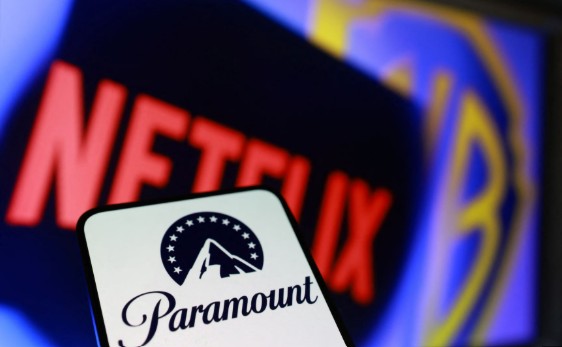
Now, it is not only Netflix that is trying to buy WBD – Paramount also just recently made a nuclear offer – not the WBD board, but to the WBD shareholders to undermine Netflix’s efforts. And the Paramount offer wants to take both the public Global Discovery arms of WBD (which includes CNN) AND Warner Bros film and television studios (which Netflix is after). Now, to emphasise further why this is of concern, I’d like to highlight that both of these corporations are imitating the Disney business model.
To highlight the issue with how Disney has amassed influence, we ought to highlight the list of brands the company owns. There’s Marvel, various TV channels, Hulu, ESPN, VICE, ABC studios, Go Pro, record labels, a massive European Telecom company known as Sky, Lucasfilm, theme parks, a game developer, a software communications company, and a construction company. But, this does not even cover all the corporations under the Disney umbrella. Therefore, this means that when we speak of Disney, we are thus talking about a multinational conglomerate that controls a vast amount of resources; they are a broadcast syndicate that controls much of daytime TV, while also having investments in various other industries.
But, what this tells us is that Disney amassed its influence through monopolistic business practices, where it bought various companies in relatively different industries, while ensuring that they all answer to the same Disney-sanctioned agenda. Basically, Disney metamorphosed from a child-friendly entertainment company into a monolith with a potential to influence popular culture, and thus institute a psycho-cultural war, where it utilises its pop culture influence to control its viewer base and beyond.
Let’s then address why this is a problem. While each of these Disney sub-companies appears to be a separate corporate entity, they are NOT. This creates an illusion of choice, where people might try to boycott a certain brand, but still buy all kinds of other products from the same company. This thus lets corporations avoid public backlash against them in the form of boycotts; thus proving that giving a single company absolute control over a given sector destroys the free market that the economy is supposedly based on. For instance, people think of Fox Sports and ESPN as competitors in a shared market. In reality all they are is a rebranding. They serve the same corporate overlords. This lets Disney obscure the fact that they are a monopoly. Monopolistic business practices destroy growth and innovation, because there is no incentive to improve or change the product when the consumer doesn’t have a choice.
The second reason that the Disney monopoly is a problem is that by controlling every aspect of media production, from studio to red carpet, Disney is able to easily outcompete or buy new companies. If those first two strategies fail, they could destroy a company by refusing to let them access the businesses that they own as Disney. For instance, if a new film studio was highly critical of Disney, Disney could refuse to work on or distribute their films; which is a notable issue, seeing that Disney controls much of the infrastructure necessary to make movies. For instance, in 2019 alone, Disney was reported to have been involved in 40% of the box office returns. But, then again considering the kinds of films that mostly come out of Hollywood, I will not defend Hollywood film producers who fight Disney to get their work produced – however, the greater point I do make with sincerity, is that Disney has built itself to become an unaccountable gatekeeper in the film and television industry, all eroding competition as well, through its vast control over various aspects of the production scene. And so, when important stories need to get told through film. Disney sheds or blocks them.
For instance, Disney actually had the rights to “The Sound of Freedom” movie which exposes the horrors of child sex trafficking, but instead of showing the movie they tried to bury it! Then, Disney eventually allowed the filmmakers to buy back the distribution rights of the film – which is nothing short of diabolical, considering that the ‘Sound of Freedom’ is not some princess film: it is a film that not only exposes the ills of child sex trafficking, but was produced with aim to encourage society to be vigilant against this problem, which really would have been a great narrative to inject into American society considering that America is reported to be the highest consumer of child pornography (while kMexico is the the largest supplier), AND also considering that there were over 300,000 children who went missing during the Biden Harris administration, which is when ‘Sound of Freedom’ was released!
DISNEY’S EMBRACE OF CORPORATISM, BEGINNING IN BOB IGER’S TENURE
When Bob Iger became president of Disney in the year 2000, and then CEO in the year 2005, Disney made significant shifts towards corporatism, which meant poor quality productions while prices for access went up. But worst of all is that Disney became focused on owning almost every aspect of a child’s life through what they watch and regard as entertainment – thus psychoculturally nudging children to develop an unconscious allegiance to Disney and its productions.
Then, another notable aspect of Disney’s shift towards corporatism is the recycled intellectual property. Disney has become notorious for producing remakes of its older (often animated films). But, by simply recycling popular culture Disney destroys creativity and originality in media. Animation and film are no longer mediums for artistic expression, but are instead emblems of corporate culture. This (ofcourse) often stifles creativity because it turns artistic ventures into profit seeking ones. This means that studios do not make movies that they think are good; they merely choose movies they think will make money, which then makes them stick with closer bets, like reboots or rip-offs of established franchises. And this is why Disney has live action versions of its own animated films, and why there are so many Cinderella movies.
That said, while there are many Cinderella films, stifling creativity is not even the worst part of this issue. What is crucial to note is that Disney’s productions always carried subliminal messages – all part of the psychocultural war. For instance, many people are discovering (as adults) that there were always agendas embedded in Disney works, particularly, through subliminal messages in productions. For instance, there are clouds, smoke or ice shards morphing into the words “sex” in differing productions; there are also references to the illuminati in older animations as well. And so, the numerous remakes are actually about modernasing the films with these subliminal messages for recent generations, so that they are also indoctrinated with the Disney message.
Written By Lindokuhle Mabaso