The G20 is a Relic of a Bygone Era
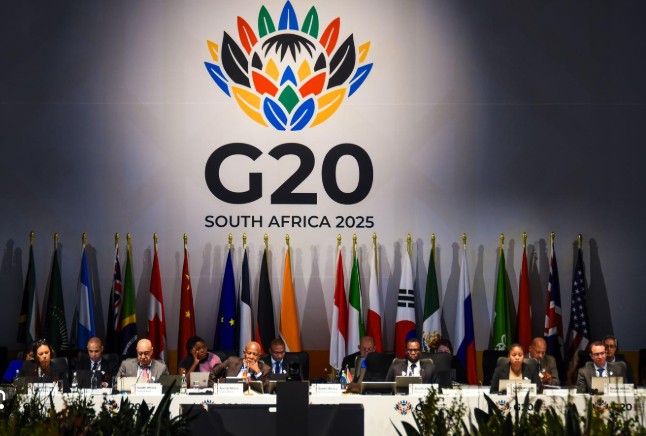
The G20 Summit: A Globalist Farce
Why Sovereignty – Not Globalism – Is the World’s Only Way Forward
Another G20 summit gathers in Johannesburg this week, but let’s not pretend this meeting will deliver real solutions. The G20 wasn’t born out of principle or shared values—it was cobbled together after the Asian financial crisis of the late 1990s, when it became obvious that the tightly-knit G7 couldn’t control global shocks anymore. This was never about equality; it was about keeping the old Western-centric order alive, merely inviting a handful of outsiders to prop up a system that worked for the few, not the many.
If you strip away the grand rhetoric, the G20’s actual purpose has always been to maintain the status quo: a club for the powerful, a smokescreen for exploitation. Its so-called “pragmatism” is nothing but self-preservation for the elites who fear losing their grip. Today, the cracks in this globalist edifice are impossible to ignore.
Africa: The Perpetual Loser in Globalist Schemes
No continent has been more consistently short-changed by these globalist clubs than Africa. The G20 has never been a platform for genuine African advancement. Instead, it’s a revolving door where Africa’s resources are eyed by foreign interests while African voices are politely sidelined and patronised. The promises of inclusion and greater influence are little more than window dressing; Africa is still expected to play by rules made elsewhere, its natural wealth funnelled outwards while the continent itself is saddled with empty pledges and hollow “partnerships.” Meanwhile, when real issues—like fairer trade, value addition, or technological transfer—are on the table, Africa is told to be patient, to wait for a trickle-down that never comes. Let’s be clear: the G20’s mechanisms ensure Africa remains a supplier of raw materials and a consumer of finished goods, never a true partner. In this globalist circus, Africa is always the exploited, never the equal.
Sovereignty Over Globalist Control
It’s no wonder that leaders who reject these tired globalist scripts—most notably Donald Trump—are causing such consternation among the establishment. Trump’s America-first approach isn’t just bluster; it’s a return to the primacy of sovereignty over pointless consensus. He understands that multilateral forums like the G20 aren’t vehicles for progress but tools for diluting national power and imposing foreign agendas. His refusal to attend, his unapologetic criticism of South Africa’s leadership, and his intention to host the 2026 summit on his own terms cut through the pretence. Why keep up the charade? The G20 offers no real benefits to nations that stand up for their own interests. Even among supposed allies, Trump’s style is to negotiate hard and protect American priorities above all else. In looser clubs like the G20, he rightly sees no point in chasing meaningless agreements that simply tie everyone’s hands and perpetuate globalist exploitation.
Six Heads of State to Skip South Africa’s G20 Summit
Following US President Donald Trump’s announcement that the United States will be boycotting the 2025 G20 Summit, several other countries indicated that their heads of state will not be attending the summit: Argentina’s Javier Milei, China’s Xi Jinping, Russia’s Vladimir Putin, Mexico’s Claudia Sheinbaum and Nigeria’s Bola Tinubu.
The Collapse of Real Global Coordination
The old system—where the world’s major powers pretended to work together while the West called the shots—is finished. The grand global architecture has collapsed into a muddle of mistrust and conflicting agendas. The G20’s inability to deliver even basic cooperation isn’t about poor hosting or difficult personalities; it’s proof that the globalist dream is dead. The West is retreating into its own corner, defending what’s left of its privileges, while the rest of the world, including Africa, seeks alternatives. New blocs like BRICS are rising precisely because the old system was stacked against them. This fragmentation is not a problem to be solved by more summits, but a necessary correction. Nations are reclaiming their right to make decisions for themselves, to defend their sovereignty, and to reject the idea that “consensus” means surrendering to someone else’s agenda.
The End of G20’s Relevance and the Need for Sovereign Solutions
Let’s stop pretending. The G20 is a relic, a talking shop whose time has come and gone. It neither understands nor addresses the real challenges facing today’s world—least of all the fundamental injustice at the heart of globalist economics. For Africa, for America, and for every nation that values its independence, the path forward lies in sovereignty, self-determination, and partnerships based on equality—not in endless summits orchestrated by those clinging to an obsolete world order.
Trump’s forthright leadership and the movement away from globalist consensus offer a model for others: put your country first, reject exploitative “cooperation,” and demand a new way of doing business. Only by breaking free from these failed frameworks can Africa—and the rest of the world—truly prosper.
The Unravelling of G20’s Influence: Sovereignty or Submission?
G20’s Waning Grip on Global Power
The cracks in the G20’s façade are impossible to ignore. Once heralded as the ultimate forum for tackling global crises, the G20 now finds itself paralysed by division and mistrust. Its promise of unity is exposed as little more than a mask for the powerful to dictate terms while silencing dissenting voices. The group’s attempts at consensus-building have devolved into stalemates, with real action sacrificed for hollow statements. Climate change, trade, finance—on every front, the G20 stalls while the world’s people are asked to pay the price for a system that serves only elite interests. The exodus of major leaders from the Johannesburg Summit signals not just a diplomatic snub, but a rejection of the G20’s legitimacy as a vehicle for meaningful cooperation.
The G7: A Relic Clinging to Control
Some may look to the G7 as a possible saviour—a smaller club, more tightly aligned. But the G7 is just another vestige of a fading order, representing the interests of a narrow elite rather than the world at large. Its history of agenda-setting is built on exclusion, not genuine partnership. Today’s challenges—pandemics, migration, energy security—cannot be solved by a handful of wealthy nations dictating terms. The era of unipolar leadership is over. Nations are no longer willing to be corralled into compliance or have their sovereignty bartered away for empty promises of “shared prosperity.”
Global Collaboration or National Reclamation?
As the old architecture collapses, a new reality emerges: countries are reclaiming their right to chart their own course. The G20 and its globalist allies would have us believe that only coordinated action can solve global problems. But this “cooperation” is nothing more than a pretext for centralisation—of power, resources, and control. The truth is, the more nations submit to these forums, the more they lose the ability to defend their industries, cultures, and people. Sovereignty is not an obstacle to progress; it is the foundation of genuine prosperity and peace.
Exposing the Globalist Machinery
The G20’s so-called “inclusive” model is just a smokescreen for a system rigged against the many and in favour of the few. With supranational blocs like the EU and African Union now sitting at the table, the G20’s agenda drifts ever further from the will of sovereign peoples. Its meetings—populated by unelected officials and corporate lobbyists—are less about dialogue, more about dictating terms from behind closed doors. The drive for “harmonisation” and “integration” is nothing but a slow erasure of self-determination, as unelected technocrats and global institutions tighten their grip on the levers of power.
Rejecting a Borderless Order
The time has come to call the G20 and its acolytes what they are: architects of a borderless order that strips away the rights of nations in favour of a centralised, unaccountable elite. Their grand designs—digital currencies, climate mandates, surveillance regimes—are not solutions, but shackles. Each dollar handed over, each regulation adopted under G20 pressure, is a step further from freedom and a step closer to a future where parliaments and people are rendered powerless.
Resisting the G20’s Encroachment
We must refuse to be complicit. Funding, legitimising, or participating in these globalist constructs only strengthens their hand. The path forward is not through more summits or grand bargains, but through renewed commitment to sovereignty, transparency, and truly representative governance. The world does not need another “consensus”—it needs a chorus of independent nations, willing to resist the tide of centralisation and to defend the right of each people to determine their own destiny.
The Dawn of Sovereign Solutions
As the G20’s influence fades, a new era beckons—one where nations are no longer mere pawns in a globalist game, but active architects of their own futures. The chorus of resistance is growing. It is time to break the chains of the G20’s failed frameworks and to build a world where sovereignty, equality, and genuine partnership are not just slogans, but reality.
Written By Tatenda Belle Panashe

slotphlogin https://www.exslotphlogin.net
ph789 login https://www.ph789-login.com
chasing cards https://otvetnow.ru salesforce call center integration