Ethiopia’s Hayli Gubbi Volcano Erupts for First Time in Nearly 12,000 Years, Sends Ash Across Red Sea
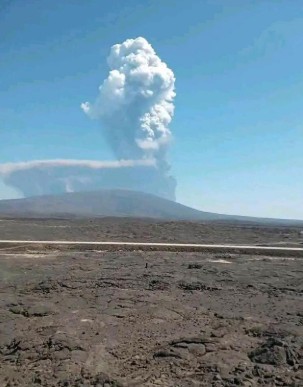
Afar Region, Ethiopia — A long dormant volcano in northern Ethiopia erupted on Sunday for the first time in almost 12,000 years, sending massive ash plumes more than 14 kilometres into the sky and spreading volcanic dust across the Red Sea toward Yemen and Oman.
The Hayli Gubbi volcano, located in Ethiopia’s seismically active Afar region, erupted for several hours, blanketing the neighbouring village of Afdera in ash and causing widespread concern among the local livestock herding communities.
Local administrator Mohammed Seid confirmed that there were no casualties but warned of serious economic fallout for villagers who depend on grazing animals for survival.
“While no human lives and livestock have been lost so far, many villages have been covered in ash and as a result their animals have little to eat,” Seid said.
Residents described moments of fear as the eruption began.Afar resident Ahmed Abdela said he heard an explosive sound accompanied by what felt like a shock wave before ash began falling across nearby communities.
A Region Built on Fire: The Afar Rift’s Volcanic Past
The eruption has renewed attention on the Afar Triangle one of the most geologically active zones on Earth.It is part of the East African Rift System, where three tectonic plates are slowly pulling apart, causing:
Frequent earthquakes
Magma movement beneath the surface
Occasional volcanic eruptions
Hayli Gubbi itself has been dormant since around 10,000 BC, according to geological records.Volcanologists have long warned that the combination of deep rift activity, hot springs, and nearby fissures makes Afar one of the few places on the planet where a new ocean is slowly forming.
Sunday’s eruption is one of the most powerful volcanic events recorded in the region in decades.
Ash Clouds Drift Toward the Arabian Peninsula
Satellite imagery detected ash plumes drifting eastward across the Red Sea toward:
Yemen’s western coastline
Oman’s southern regions
Authorities in both countries have been monitoring potential impacts on air quality, aviation routes, and weather patterns.
Livelihoods at Risk as Ash Blankets Grazing Lands
The Afar region is home to semi nomadic pastoral communities who rely almost entirely on livestock goats, camels, and cattle for food, income, and mobility.
Ash-covered grazing lands can lead to:
Food shortages for animals
Water contamination
Respiratory problems in livestock
Long-term grazing depletion
Local leaders are urging for urgent government and humanitarian support to prevent economic devastation if grazing does not recover quickly.
Monitoring Continues as Experts Assess Ongoing Activity
Ethiopian geological agencies are currently assessing the stability of the volcano, monitoring for further eruptions or seismic shifts.
Experts warn that additional tremors could follow, given Afar’s tectonic volatility.

fg777link https://www.befg777link.com
phtaya06 https://www.phtaya06y.com