Military Seizes Power in Guinea-Bissau as President Umaro Sissoco Embaló Is ‘Deposed and Arrested’
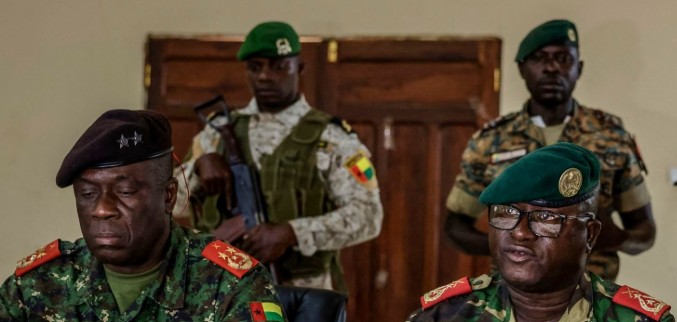
Guinea-Bissau has descended into political turmoil after soldiers took over state television early Monday, announcing that the military had seized control of the country. The declaration came amid reports of heavy gunfire near the presidential palace just three days after the nation held its legislative elections.
President Umaro Sissoco Embaló, speaking to journalists before he was taken into custody, confirmed that he had been “deposed and arrested” by members of the armed forces.
Military Suspends Electoral Process and Shuts Borders
In their televised statement, the soldiers announced the suspension of all electoral activities, the closure of national borders, and the halt of media operations until further notice. The military accused the ousted president of secretly plotting to destabilize the country, claiming the intervention was necessary to “restore national stability.”
The move has raised immediate concerns about the future of Guinea-Bissau’s fragile democracy, which has suffered repeated cycles of instability for decades.
Gunfire Around Presidential Palace
Witnesses reported bursts of gunfire early in the morning around the presidential complex in Bissau. Though the full extent of casualties and damage remains unclear, the presence of military units in key state institutions suggests a coordinated takeover.
International organizations and regional bodies have not yet issued formal responses, but analysts say swift reactions from ECOWAS and the African Union are expected in the coming hours.
A Nation Long Marked by Political Instability
Guinea-Bissau has experienced numerous coups and attempted coups since gaining independence from Portugal in 1974. No elected president has ever completed a full term in office without facing a major political or military crisis.
President Embaló, a former army general, survived an attempted coup in February 2022, during which assailants stormed the government palace. He has long accused various political factions of working to weaken his administration.
Part of a Troubling West African Trend
The crisis adds Guinea-Bissau to a growing list of West African nations where democratically elected governments have been toppled in recent years, including:
Mali
Burkina Faso
Niger
Guinea
The region is increasingly grappling with a surge in military interventions, political unrest, and weakened civilian governance.
Uncertain Path Ahead
As Guinea-Bissau wakes to this latest power shift, questions loom over:
The fate of the president
The legitimacy of the military’s claims
Whether new elections will be organized
The international community’s response
For now, the nation remains under military control, with borders sealed and communication channels restricted.

pagcor https://www.ngpagcor.net
cnc insurance https://otvetnow.ru cardiff kia